

Short stack strategy can look risky at first. However, Johnny Oshana showed that it can also be a weapon. He once said, “I play better with a short stack,” and that mindset helped shape a memorable run in televised poker. In a game where timing, discipline, and nerve matter, he proved that fewer chips do not always mean fewer options.
In addition, His success was not just about cards or prize money. It was also about psychology and patience. Poker often celebrates big stacks and huge bluffs, but Oshana took a different path. He showed that a player who understands position, timing, and table dynamics can still control the table. If you want a simple primer on the basics, Poker Basics Made Simple is a helpful place to start.
Short Stack Strategy and the Power of Fewer Chips
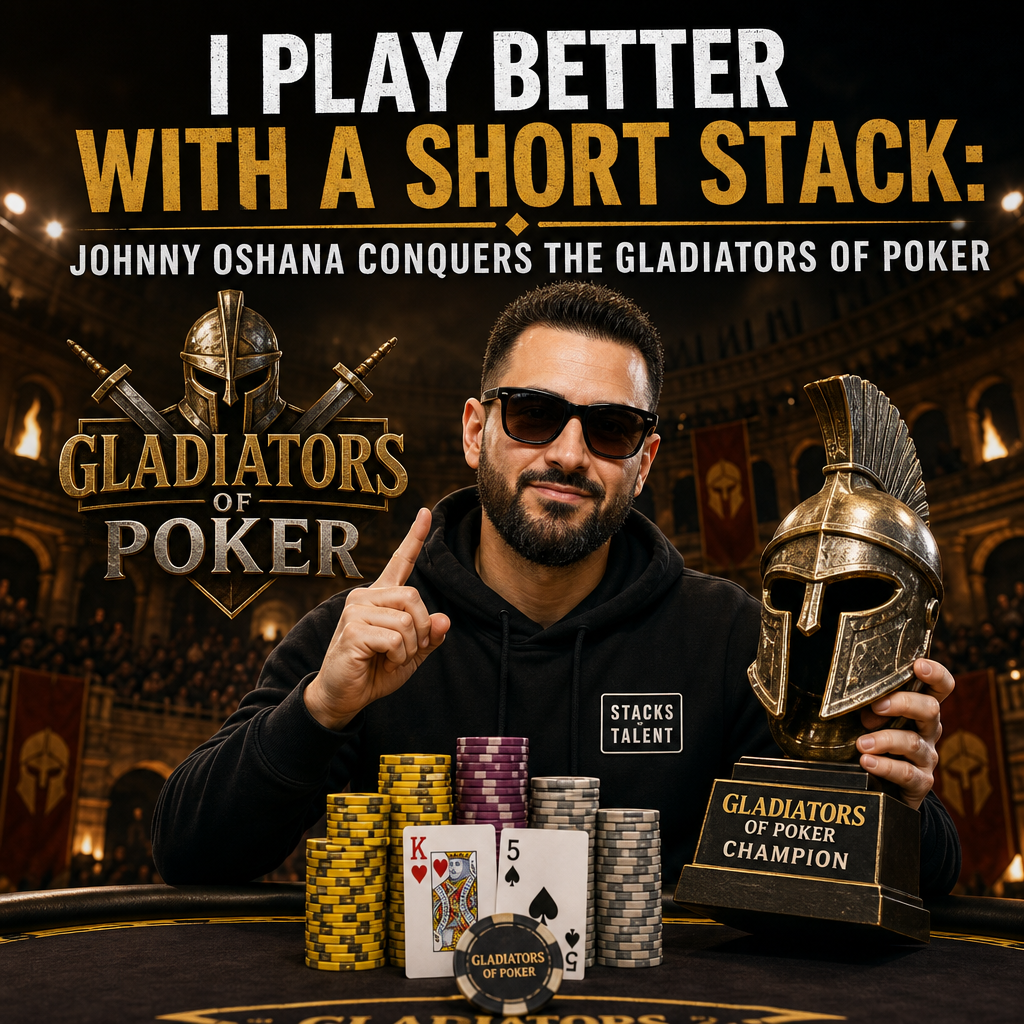
As a result, In poker, a short stack means you have fewer chips than most opponents. That can feel limiting. Still, it can also simplify choices and sharpen your thinking. Many players panic when their stack gets low. Oshana did the opposite. He treated the spot as a chance to act with purpose.
However, With fewer chips, there is less room for loose calls and fancy lines. So, players must focus on strong hands, good timing, and pressure points. A short-stacked player often has stronger fold equity too. That means opponents may fold more often when facing a shove. Oshana understood this well.
For example, His approach was not reckless. It was efficient. Every chip mattered. Every pot mattered. As a result, he could make aggressive moves that forced opponents into mistakes. For more on the mental side of the game, see How to Control Your Emotions in Poker.
Short Stack Strategy and why Short Stack Play Can Work
Meanwhile, Short stack poker is often misunderstood. Some players think it means “shove or fold” and nothing else. That is too simple. In reality, good short stack play depends on several factors.
First, position matters. Acting later gives you more information. Second, hand selection matters. You need hands that can stand up to action or create pressure. Third, table image matters. If opponents think you are tight, they may fold more often. If they think you are fearless, they may avoid conflict.
Oshana did well because he stayed clear and confident. He knew when to push and when to wait. He also knew that a short stack can make opponents overconfident. They may think the short-stack player is desperate. Yet desperation and strategy are not the same thing. That gap often creates profitable spots.
Conquering the Gladiators of Poker
Overall, the phrase “gladiators of poker” suggests a brutal, high-stakes fight. In that setting, Johnny Oshana stood out because he stayed composed under pressure. His results were not built on luck alone. They came from reads, timing, and trust in his plan.
In addition, Competitive poker can feel like combat. Each player wants control, but no one wants to give up chips too easily. Against aggressive opponents, many players freeze. Oshana did the opposite. He accepted the challenge and kept his range strong. That made him harder to bully and harder to read.
His style also challenged the usual image of poker success. Big stacks draw attention because they lead to large pots. Even so, Oshana reminded players that pressure and survival are also forms of power. Sometimes the player with fewer chips has the sharper edge.
The Mindset Behind the Strategy
As a result, One key lesson from Oshana’s play is that strategy starts in the mind. A short stack can trigger fear, and fear leads to bad decisions. Players may call too wide, chase weak draws, or fold at the wrong time. Oshana avoided those traps by staying calm.
However, His attitude offers a broader lesson. Do not let your chip count decide your judgment. A short stack does not mean the game is over. It means the game has changed. The strong player adapts fast and looks for the right opening.
For example, Poker rewards emotional control. Good players stay steady through swings because they know variance is part of the game. Oshana treated a short stack as a tactical condition, not a failure. That mindset helps separate seasoned players from those who crack under pressure. For deeper context on poker fundamentals, Poker Hand Rankings is a useful reference.
What Players Can Learn from Johnny Oshana
Meanwhile, Johnny Oshana’s success offers practical lessons for any player who wants to improve.
- Adaptability matters. Tournament stacks change all the time, so you need more than one style.
- Timing matters. Short stack play is not random aggression. It is about choosing the right moment.
- Confidence matters. Theory helps, but conviction helps more when the spot gets tough.
- Pressure can be useful. A short stack can create fold equity and force errors.
Overall, these lessons are useful in both tournaments and cash games. They also fit a wider poker mindset: play smart, stay alert, and make every decision count. If you want to build a stronger overall approach, Play Smart — Not Randomly! fits that idea well.
A Lasting Lesson in Tactical Courage
In addition, Johnny Oshana’s identity as a player is tied to the idea that limits can become strengths. When he said he played better with a short stack, he was not pretending that fewer chips are ideal. He was showing that he understood how to operate in a tight, high-pressure game.
That is part of what makes poker so interesting. There is no single way to win. Some players build huge stacks and apply constant pressure. Others survive, wait, and strike at the right time. Oshana belonged to the second group, and his style remains a strong lesson in tournament poker.
As a result, For background on the event and the result, see this PokerNews report on Johnny Oshana’s WSOP Gladiators of Poker win.
In the end, Johnny Oshana showed that you do not need the biggest stack to fight like a champion. You need discipline, timing, and the nerve to act when the table opens up. That is how short stack strategy becomes more than survival. It becomes a way to win.