

In addition, this guide explains Final Table Poker with practical details and clear takeaways. Montreal’s Rami Hammoud has built a reputation for staying composed when the pressure rises. That calm has become one of his most valuable weapons on the way to the final table. In a game where one decision can change everything, his steady style helps him navigate deep runs with poise. As the field narrows and the stakes climb, his approach is a reminder that poker success depends on cards, strategy, and emotional control.
As a result, For more background on the event, see the PokerNews report on Rami Hammoud’s WSOP Main Event final table run.
Final Table Poker and a Steady Presence in a High-Pressure Game
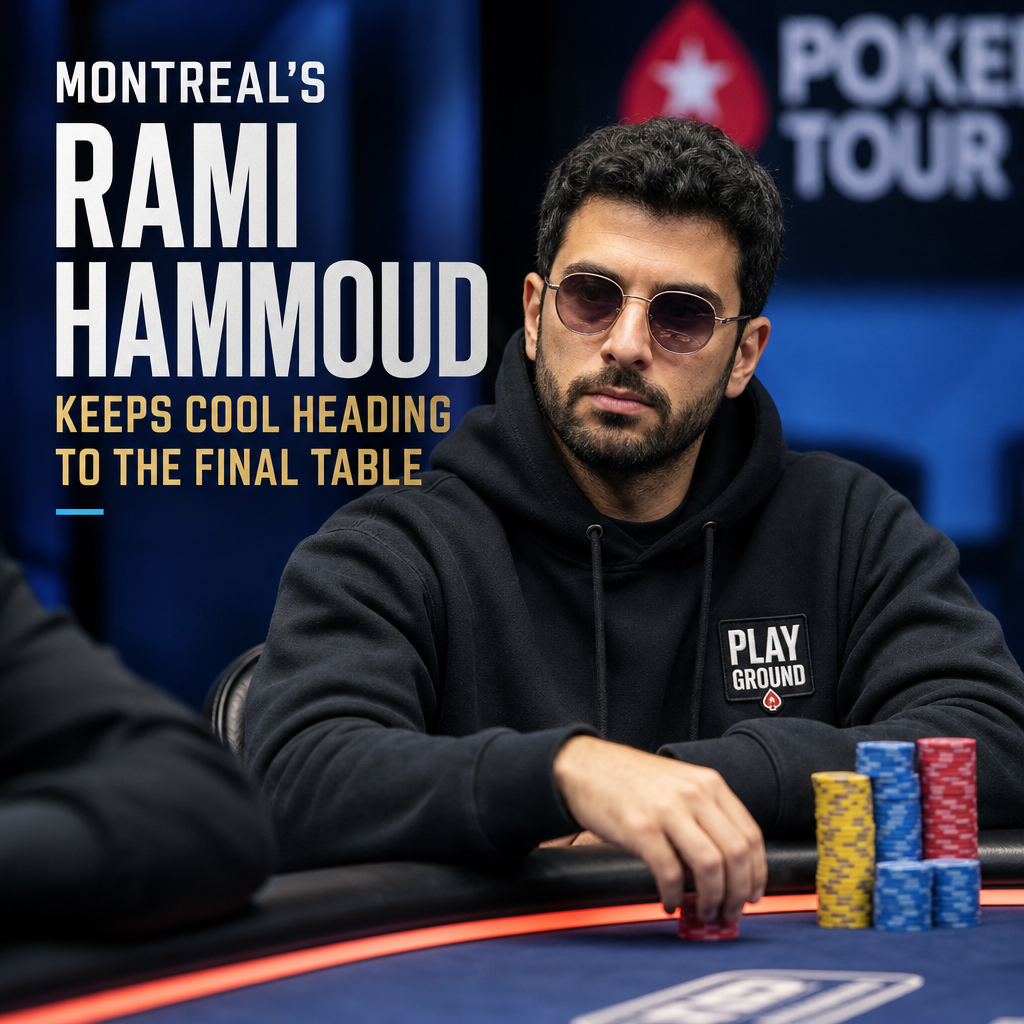
However, Deep in a tournament, the environment changes fast. Blinds rise, stacks shrink, and every player feels the pressure to survive. For many competitors, that tension leads to rushed decisions, over-aggression, or hesitation at the wrong moment. Hammoud, however, has shown that he can keep his rhythm intact as the table gets tougher.
That steadiness matters because final table poker is often less about flashy plays and more about making the right ones again and again. Players must read stack sizes, understand payout pressure, and spot when others tighten up. Hammoud’s calm demeanor lets him process those shifting variables without losing his plan.
Final Table Poker and montreal’s Rami Hammoud Keeps Cool Under the Spotlight
For example, One of the biggest challenges in a major tournament run is handling attention. Once a player climbs the leaderboard, notice grows quickly. Opponents become more alert, media interest increases, and each pot carries more weight. Montreal’s Rami Hammoud keeps cool in that setting, and that composure can be the difference between a strong finish and a costly collapse.
Meanwhile, Remaining cool does not mean playing passively. Instead, it means keeping clarity. A balanced player can still apply pressure, steal blinds, and value bet effectively without drifting into reckless territory. Hammoud’s style suggests he knows when to press and when to wait, which is vital as the final table approaches.
That mental edge also shows up in small ways. He may take a little more time on key hands, choose his spots carefully, and avoid the emotional reactions opponents want to provoke. In tournament poker, that restraint can be as powerful as a big bluff or a timely hero call.
Final Table Poker and why Composure Matters More Near the Final Table
Overall, the closer a tournament gets to the final table, the more each decision matters. A single lost pot can cost several pay jumps, while one well-timed shove can open the door to a bigger score. That is why composure is so valuable late in the event. Players who think clearly under pressure usually outperform those who rely only on momentum or instinct.
In addition, Hammoud’s ability to stay composed likely helps him in several ways:
- He can avoid tilt after a bad beat.
- He can spot opportunities when opponents become cautious.
- He can adjust to changing stack depths without panic.
- He can make rational decisions in ICM-heavy spots.
- He can project confidence without seeming reckless.
As a result, these qualities become even more important at a final table, where survival and chip gain must be balanced carefully. The difference between first and sixth place can be enormous, so knowing when to gamble and when to preserve chips becomes an art form.
Reading the Table, Not Just the Cards
However, Tournament poker rewards players who understand people as much as probabilities. By the final-table stage, the best competitors are often the ones who can read table flow, betting patterns, and emotional signals. Hammoud’s path suggests he is not only reacting to the cards in front of him. He is also watching how opponents respond to the moment.
For example, a player who keeps cool gains a major advantage here. Anxiety, frustration, and excitement can cloud judgment. Calm players are more likely to notice timing tells, stack pressure, and shifts in aggression. They can also exploit opponents who are visibly trying to force action.
Meanwhile, this is where tournament experience matters. The deeper a player goes, the more familiar the pressure becomes, and the better they are at finding the right mix of patience and aggression. Hammoud’s run shows that staying mentally present can be just as important as winning a few big pots.
The Final Table Requires More Than Momentum
Overall, Many poker fans assume that a player who reaches the final table is simply riding a hot streak. Card distribution and favorable breaks do help, but long runs usually require more than luck alone. Final-table success tends to belong to players who adapt quickly, stay disciplined, and avoid emotional swings.
In addition, Hammoud’s calm approach suggests he understands that momentum in poker is fragile. A few strong hands can build confidence, but confidence must be managed carefully. Too much excitement can lead to overplaying marginal holdings, while too much caution can allow opponents to steal too many pots. The sweet spot lies in controlled aggression, and that is where a steady mindset becomes essential.
At the final table, every opponent is also under strain. Some will pressure shorter stacks. Others will tighten up in hopes of laddering through the payout structure. This creates a chess-like atmosphere in which composure becomes a strategic edge. Hammoud’s ability to keep cool means he is likely better prepared to exploit those tendencies than someone reacting emotionally to the moment.
Lessons From a Calm Tournament Run
As a result, There is something instructive about a player who advances deep without looking flustered. Hammoud’s run highlights several lessons that apply beyond poker:
- Patience can create more chances than force.
- Discipline often outlasts aggression.
- Emotional control leads to clearer decisions.
- Adaptability matters when the pressure rises.
- Confidence works best when it stays quiet and controlled.
However, these lessons reflect the broader truth of tournament poker: success is rarely about one dramatic moment. It usually comes from many small decisions made well over time. A player who stays calm enough to make those decisions consistently has a real edge.
For example, For another recent Canadian poker story, read about ZaCafu’s win in the 888poker Mystery Bounty Main Event.
A Run Built on Focus
As the final table draws near, the spotlight naturally shifts to the remaining contenders. Yet the players who perform best in these moments are often the ones who seem least affected by them. Hammoud’s cool-headed approach has positioned him well for exactly that kind of challenge.
Whether he is facing a tough shove decision, defending his blinds, or setting up pressure on a vulnerable stack, his composure keeps him anchored in strategy rather than stress. That is what deep tournament runs are made of: not just skill, but the ability to keep making smart choices when every choice matters.
For Montreal’s Rami Hammoud, keeping cool is more than a personality trait. It is a competitive advantage, and it could prove decisive as he heads toward the final table.