

WSOP Day 49 delivered the kind of late-stage tension that makes the World Series of Poker grind so compelling. After a fast-moving day of six-handed action in the $10,000 6-Max championship, only four players remained. However, the tournament clock made one thing clear: an extra day would be needed to decide the winner.
In addition, the final table turned into a deep strategic battle. There were big swings, careful survival, and elite decision-making. For more context on the event, see PokerNews’ report on the extra day in the $10,000 6-Max.
WSOP Day 49 and a Fast-Moving Final Stretch
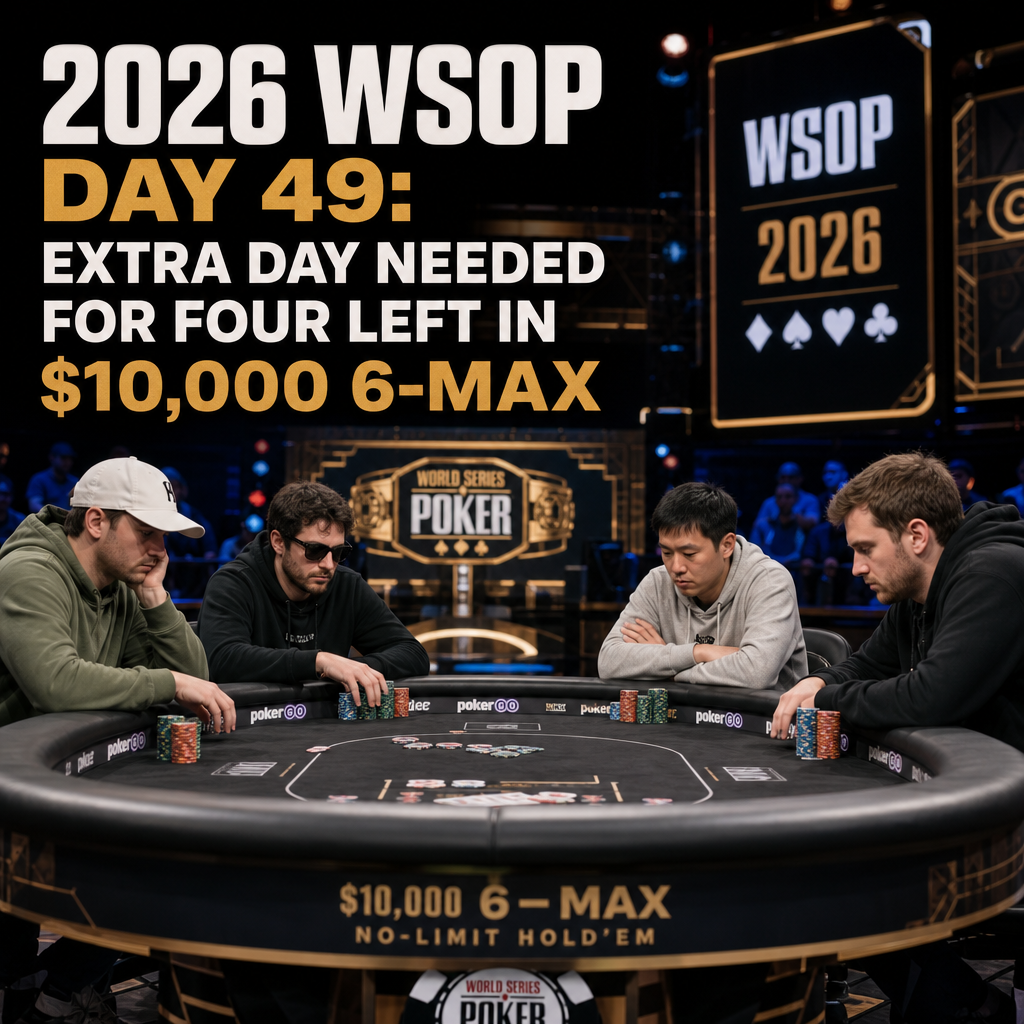
As a result, the action on Day 49 moved quickly. In six-max poker, every orbit can change chip stacks in a hurry. Players had little room to wait for premium hands. The shorter table also kept blind pressure high.
However, that pace created a tense atmosphere as the field shrank to four. Big pots came with balanced aggression. Each elimination brought the tournament closer to its finish. Still, once the final four was set, the stack sizes made a same-day ending unlikely.
For example, the extra day was not a surprise. Even so, it showed how evenly matched the final four were. None of the players could coast to the title. Each one had chips, but not enough room to force a quick finish.
Wsop Day 49 and why the Extra Day Matters
Meanwhile, an extra day in a high-stakes WSOP event changes the rhythm. It gives players time to reset before the biggest hands of the summer. Fatigue matters here, and recovery can become a real edge.
Overall, for the final four, the added day brings more time to study stack sizes and opponent tendencies. It also allows them to prepare for a finish that could last several hours. Final-table poker at this level is not just about cards. It is about pressure, timing, and making the right adjustment at the right moment.
The extra day also raises fan interest. WSOP finales often produce memorable moments. When a title comes down to four-handed play, every hand feels bigger. Even a small pot can shift momentum.
The Challenge of the $10,000 6-Max Format
In addition, the $10,000 buy-in brings top-tier talent. The six-handed format adds another layer of difficulty. Unlike full-ring events, six-max play forces wider opening ranges and stronger blind defense.
As a result, that creates more confrontations, more three-bets, and tougher postflop spots. By four-handed play, the edges are often small. Stack depth shapes many decisions, and every river card can matter.
However, players who take controlled risks usually gain ground. Those who tighten up may slowly give back blinds and antes. As a result, six-max finales often bring major momentum swings.
What the Remaining Players Face
For example, the four survivors face both technical and mental tests. Technically, they must adjust to changing stack depths and ICM pressure. The payout jumps are large, so survival still has value even for a healthy stack.
Meanwhile, psychologically, the challenge is just as sharp. Each player knows a WSOP title is close. At the same time, they know how fast everything can change. A failed bluff, a cooler, or a mistimed call can end the run.
Overall, the best players at this stage stay patient without becoming passive. They apply pressure without overextending. That balance often decides who reaches the finish line.
Preparation also matters. Some players do better after a short pause. Others prefer to keep momentum rolling. In a four-handed finale, both styles can work. Still, adaptability often separates the winner from the runner-up. For another look at that kind of late-stage edge, read our coverage of Johnny Oshana’s short stack strategy win.
Bracelet Pressure at Its Highest
In addition, every WSOP final table brings pressure. However, deep-stage bracelet events carry extra weight. The title means more than prize money. It is a career-defining achievement that places a player among the elite.
As a result, the bracelet dream can help and hurt. Some players focus even more when the title is near. Others feel the moment closing in. Managing that emotional balance is a big part of success.
However, fans know the final day often creates unforgettable hands. The result may come from a coin flip, a bluff catch, or a patient grind. Either way, the last chapter usually leaves a mark on the summer.
Looking Ahead to the Finish
With four players left and an extra day on the schedule, the $10,000 6-Max was set for a dramatic ending. The remaining contenders had already survived a difficult field. Yet the hardest part was still ahead.
Every chip would matter. Every decision would be watched. Every confrontation could shape the bracelet race.
The final day promised elite poker for WSOP fans. In a tournament built on aggression, skill, and endurance, the last four had earned their chance. Now the only question was who would navigate the final stretch and turn a deep run into a bracelet-winning performance.