

Martin Kabrhel and Jeremy Seidel both came up short of a bracelet, but their latest WSOP deep runs still made a strong statement. Each player battled through pressure, big fields, and tough final-stage decisions. As a result, both stayed in the spotlight until the end.
Even without a gold bracelet, these finishes mattered. Deep runs at the WSOP are more than near misses. They show consistency, patience, and the ability to handle elite competition. For Kabrhel and Seidel, the results reinforced why both remain dangerous in major events.
WSOP deep runs and Kabrhel’s big-field presence
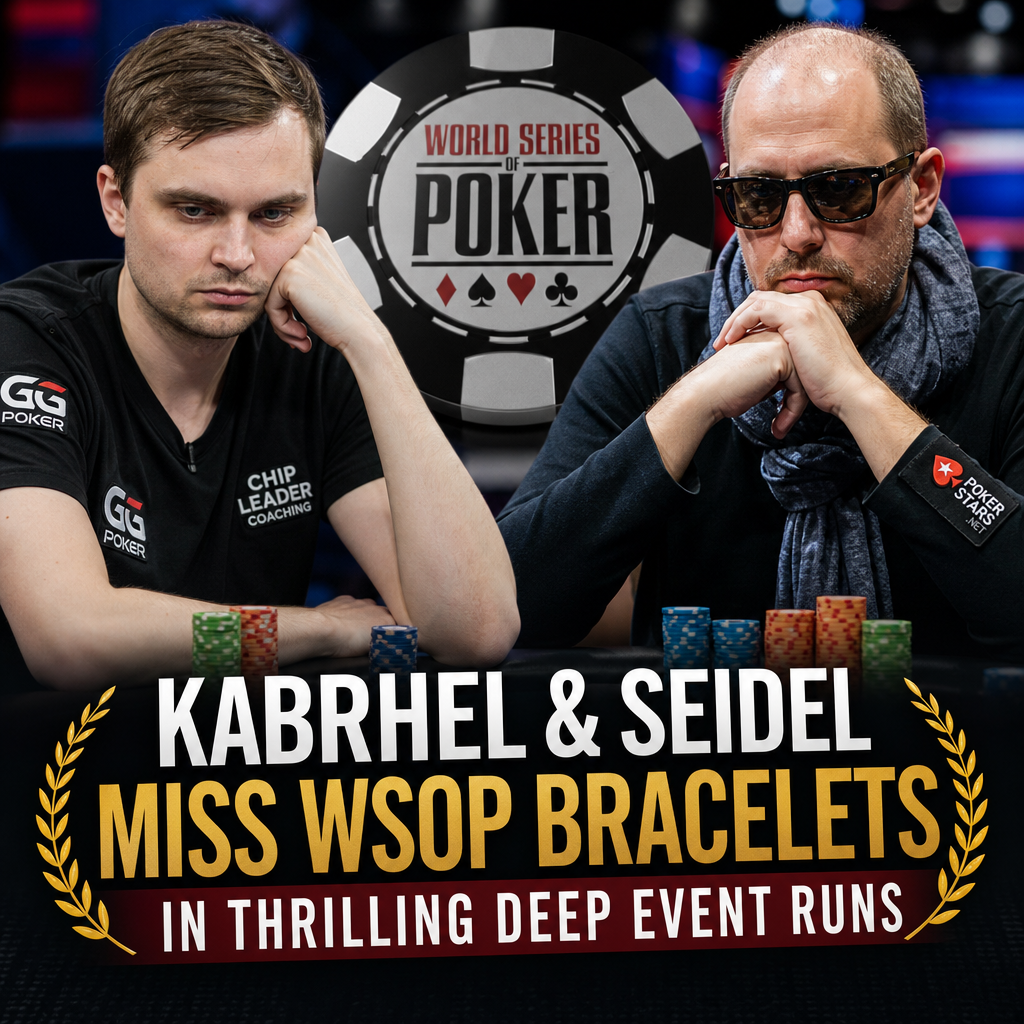
Martin Kabrhel has built a reputation unlike anyone else in poker. He is part entertainer, part tactician, and part psychological disruptor. Whenever he gets close to the top of a chip count, the mood at the table changes fast.
His style can frustrate opponents. However, it can also push them into uncomfortable spots. That edge matters in large WSOP fields. Small mistakes can become costly exits very quickly.
In this event, Kabrhel again showed why he is such a threat in deep structures. He handled tough spots well and kept pressure on his opponents. That steady aggression helped him survive in a field where many players were waiting for premium hands.
This kind of run is notable because of the path, not just the finish. WSOP deep events demand stamina, emotional control, and careful stack work. Kabrhel’s ability to stay active without becoming reckless is a major reason he often goes far.
WSOP deep runs and Seidel’s steady climb
Jeremy Seidel took a different path, but his run was just as impressive. He is known for discipline, strong tournament instincts, and careful decision-making. While others grab headlines, Seidel often builds stacks quietly.
His deep run showed the value of patience and precise bet sizing. It also showed good timing. In a long WSOP event, that approach can be very effective.
Unlike players who rely on volatility, Seidel often chooses the cleanest practical play. That style works well in major events. Long levels and deep stacks reward players who avoid needless clashes. His run showed strong fundamentals and solid pressure control.
He also stayed composed during key transitions. As fields shrink, pay jumps grow. That changes every decision. Seidel adjusted well as the pressure increased.
WSOP deep runs and why they matter without a bracelet
For many fans, a bracelet is the ultimate prize. That makes sense. It is the most iconic symbol in tournament poker. Even so, deep runs still carry real value when the title slips away.
A strong finish can mean major prize money. It can also improve leaderboard position and confidence. In addition, it can sharpen a player’s image for future events.
These results also show consistency against elite fields. For Kabrhel and Seidel, that matters a lot. Both have proven records, and each strong finish adds to that record. In poker, repeated deep runs often say more than one trophy.
The pressure of the WSOP final stages
The late stages of a WSOP event are unlike almost any other poker setting. Payout jumps get bigger. Short stacks get desperate. Medium stacks face the hardest choices.
Every hand has a cost. At the same time, every hand offers a chance. The deeper a player goes, the more opponents adjust. That leaves very little room for error.
Those realities likely shaped both outcomes. Even a strong run can end on one all-in, one missed value bet, or one brutal river card. A poor bluff timing can also end a bid for the win.
Kabrhel’s style can create chaos in these moments. However, it can also invite resistance. Seidel’s measured approach reduces mistakes, but it still depends on winning key showdowns. In high-level tournament poker, no strategy guarantees a bracelet. The goal is to create enough chances for the cards to cooperate.
What these results say about current form
These deep runs suggest that both players are still performing at a high level. Kabrhel’s result shows that his unusual, high-pressure style still works in elite fields. Opponents may know his approach, but stopping it is another matter.
Seidel’s finish points to the strength of a disciplined strategy. Modern poker often rewards aggression, yet strong fundamentals still matter. His run suggests he remains very capable in the biggest summer events.
Momentum also matters. A long run through a huge field can boost confidence. That often helps a player enter the next event with sharper focus and better energy. For that reason, these finishes may pay off again soon.
Related WSOP coverage and live updates
For more on current WSOP action, see the WSOP Day 49 coverage of the $10,000 6-Max event. You can also follow live event notes and updates through PokerNews live WSOP reporting.
The bracelet slipped away, but the message was clear
The lack of a bracelet does not reduce the quality of either performance. In fact, going deep in a WSOP event is hard enough on its own. Huge fields, elite opponents, and poker variance make every run a major test.
Kabrhel reminded everyone that he remains one of the game’s most difficult opponents. Seidel showed again that patience and precision can still carry a player far. Together, their runs added another strong chapter to the summer.
In the end, both players missed out on bracelets. Still, neither left empty-handed in terms of respect or validation. Their performances proved that they still belong on poker’s biggest stage.