

In addition, this guide explains Wsop Comeback with practical details and clear takeaways. Phil Hellmuth has built a career on dramatic entrances, sharp reads, and poker moments that turn a tournament room into theater. Whether he is racking up bracelets or sparring with the field, he rarely fades quietly. That is why any late-stage WSOP storyline involving Hellmuth carries extra tension: is this the setup for one more legendary rally, or the start of a disappointing final-day finish?
As a result, At the World Series of Poker, momentum can swing quickly. Few players understand variance, pressure, and public expectation better than Hellmuth. A deep run on the final day is never just about chip count. It is about patience, table dynamics, timing, and the ability to survive when every mistake is magnified. For a player with Hellmuth’s résumé, the question is not only whether he can win, but whether he can turn a tense final-day position into another signature finish.
WSOP comeback and the weight of expectations
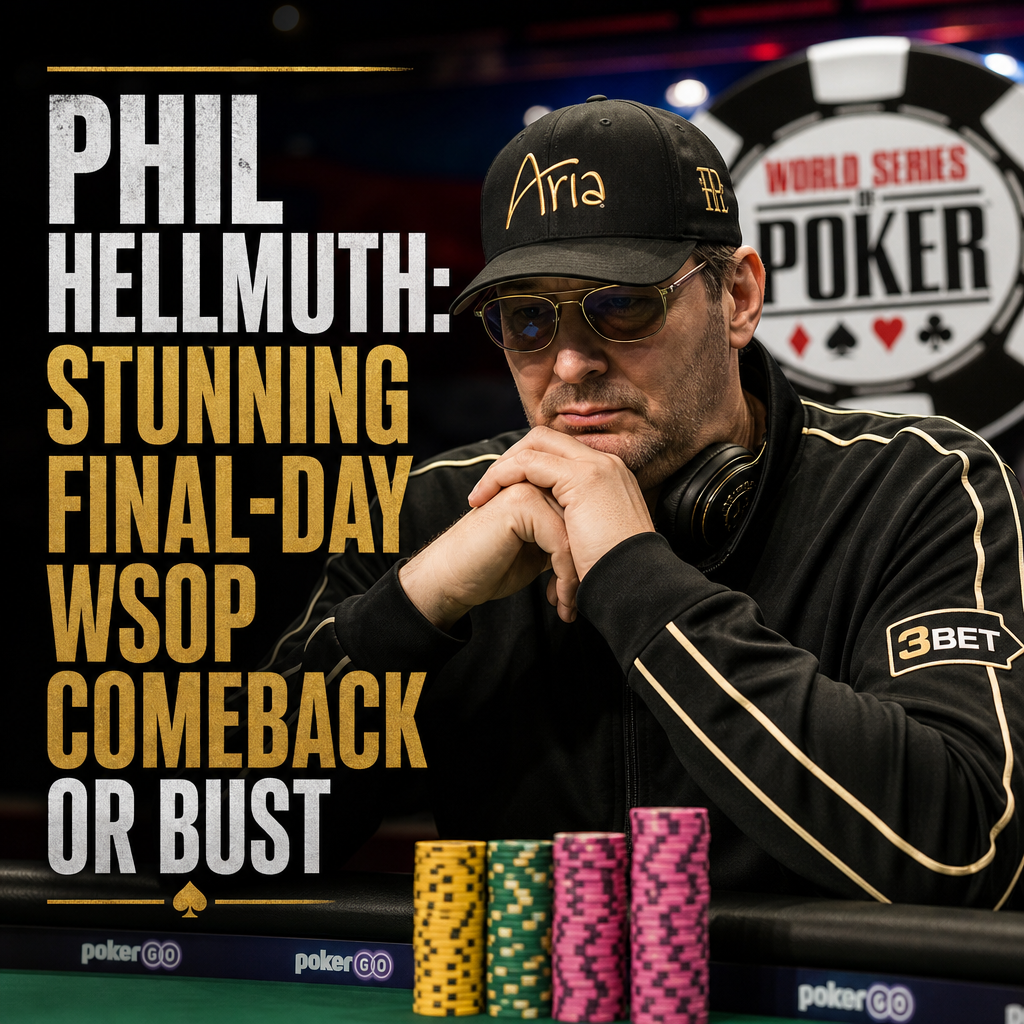
However, Every appearance Hellmuth makes at the WSOP seems to come with a story attached. He is the all-time bracelet leader in the event’s modern era, and that reputation creates a unique kind of pressure. Fans expect fireworks. Opponents often want to be the one who sends him home. Commentators track his every move. In that environment, even a modest chip stack becomes a test of mental strength.
For example, Hellmuth has always embraced the idea that poker is as much about survival as it is about aggression. In many ways, his tournament style is built for long events. He can fold his way through difficult spots, wait for the right opportunities, and then strike when the table least expects it. That approach can look conservative to outsiders, but in the WSOP, especially on a final day, patience often matters more than spectacle.
Meanwhile, the final day of a major event often features a compressed field, bigger pay jumps, and less room for error. One lost all-in can end a run instantly. One well-timed bluff can restore hope. For Hellmuth, who has spent decades navigating high-pressure poker stages, the challenge is to keep his emotions aligned with the moment rather than the memory of past success.
Wsop Comeback and why a final-day comeback is never impossible
The phrase “stunning comeback” fits Hellmuth because he has repeatedly shown that he can recover from adversity. In poker, a comeback does not always require a giant stack. It requires enough fold equity, discipline, and table awareness to survive until the right spot appears. A player with a world-class tournament sense can often turn a middling position into a threat if the table softens, the blinds rise, or the chip leaders clash.
Meanwhile, Hellmuth’s best weapon in these situations is his ability to exploit human behavior. He reads frustration, impatience, and fear as well as anyone in the game. When other players start looking ahead to pay jumps or becoming overly cautious near the final table, he can capitalize. If the structure gives him room to maneuver, he can apply pressure in ways that force opponents into uncomfortable decisions.
A comeback also depends on controlling narrative. Hellmuth is famous for understanding the psychological side of poker, and that matters more than people admit. If he can stay composed and avoid bleeding chips in marginal spots, the pressure shifts to the table. Suddenly, the player everyone expected to be eliminated becomes the one forcing others to make tough choices.
Overall, For more context on the latest tournament chatter, see PokerNews’ report on Hellmuth’s final-day WSOP run.
Wsop Comeback and why the “or bust” side is real
In addition, Of course, the “or bust” part of the story is just as important. A final-day WSOP run is unforgiving, and even elite players can collapse if the deck turns cold. Short-stack poker can become a grind of push-or-fold situations, and against prepared opponents, one misstep can erase hours of work.
As a result, Hellmuth’s style has sometimes drawn criticism from analysts who prefer more aggressive, high-volatility approaches. While his selective strategy has produced enormous success, it can also leave little margin for error when the stack dwindles. If he cannot find premium spots or force folds in the right moments, he may be dragged into tough, unavoidable confrontations.
There is also the emotional factor. Hellmuth is known for wearing his feelings on his sleeve, and that can be both an advantage and a vulnerability. When the cards do not cooperate, it is harder for any player to stay perfectly balanced. The final day of a WSOP event can test not only technical skill but also composure under constant observation. If frustration enters the picture, the comeback becomes much harder to sustain.
The strategic keys to a Hellmuth finish
However, If Hellmuth is going to make a deep final-day push, several factors need to fall into place.
1. He must preserve stack integrity
For example, Tournament poker rewards players who avoid unnecessary losses. Hellmuth does not need to win every pot; he needs to prevent small leaks from becoming fatal ones. In a late-stage WSOP setting, keeping enough chips to pressure medium stacks can be more valuable than forcing action too early.
2. Table selection and seat dynamics matter
Meanwhile, Not every table is equally favorable. If Hellmuth ends up seated with passive players or opponents who fear laddering, he gains leverage. If he is surrounded by aggressive chip leaders, the road becomes much steeper. Position and table composition can completely reshape a final-day path.
3. He needs the right timing
Overall, a successful comeback is often about choosing the correct moment to become active. Blind pressure, ante dynamics, and stack distribution all shape when to attack. Hellmuth’s experience gives him an edge in recognizing those windows, but he still has to convert awareness into action.
4. Emotions must stay under control
In addition, No matter how much history a player has, the present hand is the only one that matters. Hellmuth’s best runs usually come when he channels energy into focus rather than drama. The more he can stay locked in, the better his odds of turning a tense finish into a memorable one.
Why fans care so much about a Phil Hellmuth WSOP run
As a result, Few players inspire stronger reactions than Hellmuth. Supporters see a champion with unmatched longevity and an ability to deliver unforgettable tournament moments. Critics see a polarizing figure who thrives in the spotlight. Either way, people watch. That matters because WSOP storylines are built not just on results, but on personality, history, and stakes.
A final-day Hellmuth run also taps into a broader poker narrative: can experience still beat aggression in the modern game? As fields become tougher and strategies more refined, veteran champions are often asked to prove they can still adapt. Hellmuth’s presence in the mix turns that question into a live test. If he advances, it reinforces the idea that deep tournament instincts remain invaluable. If he falls short, it becomes another reminder of how brutal modern WSOP fields can be.
Stunning comeback or bust: the real answer
However, In truth, the answer is often both possibilities at once. That is what makes Hellmuth compelling. A final-day WSOP scenario involving him is rarely routine. It can unravel in one orbit, or it can suddenly flip into a path toward a final table, a podium finish, or even another bracelet chase. The line between bust and breakthrough is extremely thin.
For example, Hellmuth’s legacy ensures that even a difficult position is never meaningless. Every deep run adds another chapter to a long career defined by resilience, confidence, and a willingness to compete under the brightest lights. If he can harness that experience, avoid costly mistakes, and catch the right run of cards, a stunning comeback is entirely possible. If not, the bust outcome remains very real.
Meanwhile, that tension is exactly why Phil Hellmuth remains one of poker’s most watched figures. In WSOP events, he is never just another player on the board. He is a story waiting to be resolved, and on the final day, that story always feels like it could go either way.